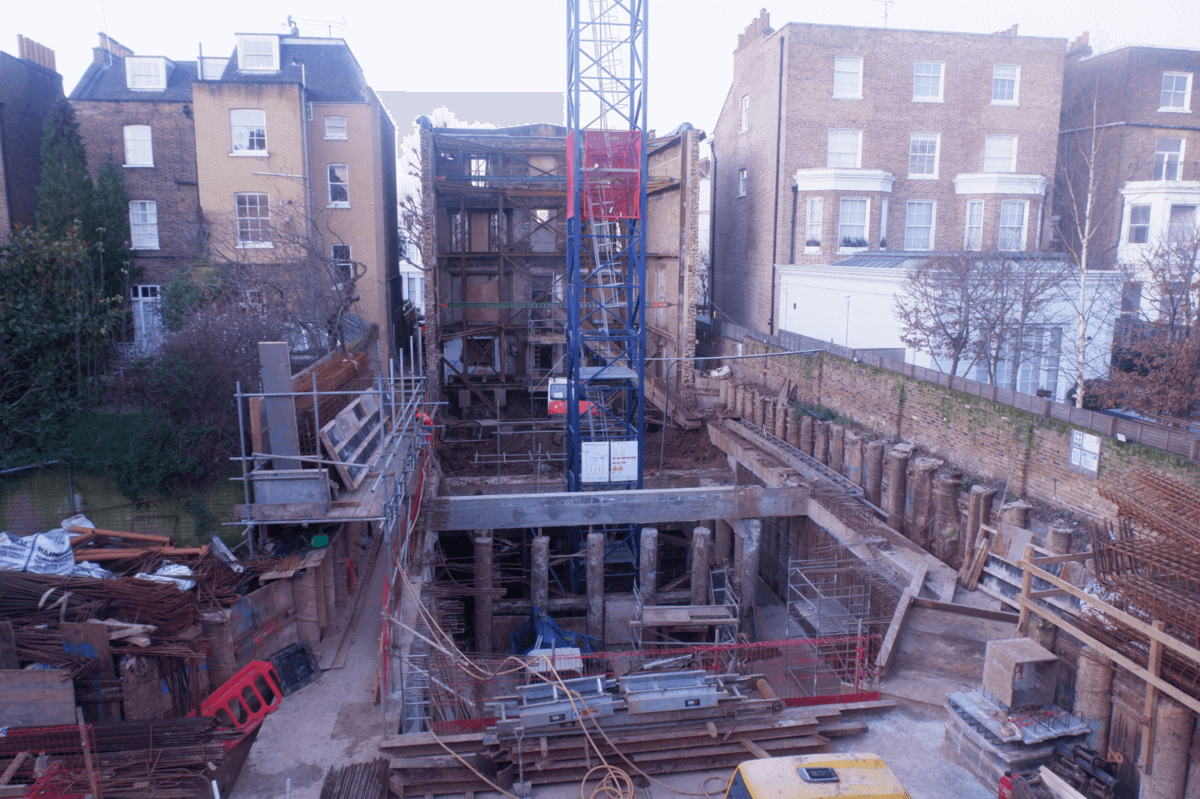

In London, basements are more than just a reaction to space constraints. They are a reflection of the evolving architecture of the city, one way to create spaces for practical life and work without expanding the footprint of historic streets. In Kensington and Chiswick, the houses are extended downwards to unveil a formidable underworld of residents. To understand what you happen during basement excavation in London, you need more than technical expertise. It takes an appreciation for the way the city’s buildings talk to their ground, and how underpinning ensures stability as construction proceeds.
Having watched a few basement dig projects myself, it amounts to every bit as much observation and making do as engineering calculations…. The land, the structure at hand and the surrounding environment all inform those decisions. The apparent effect, a new room underground, is only the beginning. And the real action takes place in the subway’s subterranean chaos, both controlled and uncontrolled.
The Importance of Underpinning in London Basement Conversions
Underpinning No London basement excavation starts without a clear underpinning plan. There is the underpinning, where you make sure existing foundations are strong enough to bear new loads. In practical terms, it is the lifeline of any project that includes london basement extensions. Without it, if soil is excavated from beneath a building, it could settle, crack or even collapse.
There are several methods which can be used to underpin a building but the method is selected based on soil condition, type of construction and depth of excavation. Old-fashioned pit underpinning is on the other hand still employed by some Victorian terraces, where slow and steady digging permits a gradual adjustment of foundations. In case of large projects or if soil condition isn’t predictable, piled underpinning is used. The technique allows the loads to be transferred down to stronger soils or rocks that are capable of acting as a foundation for the structure. The expert basement excavation london service we deliver at Omega Basements recognises that it is a precise art not to be applied callously: underpinning should never be approached with the oversimplication of one-size-fits-all.
Soil conditions and the sticky problem of London Clay
In many residential areas, London’s most common soil is clay; and this presents its own challenges. The clay swells when wet and shrinks when it dries, so excavating is a delicate process. Changes in moisture can effect the bearing capacity of the ground even to small degree with London basement excavation projects, on both original building and proposed basement.
Variability must be accounted for in the underlying strategies. It does of course depend on soil structure and, such as it is, in the Chiswick area with many mature trees and/or historic (i.e. old) drainage systems the moisture level and stability can sometimes be affected thereby. It is necessary to use temporary supports of some kind, sequencing of excavation carefully and the management of water. Site teams often monitor in real time the levels of moisture and soil activity, adjusting the underpinning as required ensuring that the building it supports stays safe.
Managing Structural Loads during Excavation
The moment you take some of the soil out from under a building it’s going to alter how load is distributed. Walls and foundations and party walls that sat on firm soil now depend upon the temporary supports of thick wood. The transfers of these loads are carried out by underpinning to deeper soils or extending the foundation laterally.
Load transfer must be gradual. Fast changes, especially if uneven, can cause masonry or concrete to have stress points that result in cracking or other long-term distortions. On site, gangs of men tend to work in short stretches, underpinning incrementally so that the building is supported at all times. This cautious approach is especially important for london basement extensions, where the load of the original building has to sit in harmony with new underground spaces.
Water and Groundwater Management
One of the longest-standing issues with basement excavation is water. Groundwater can be seasonal and surface water runoff can enter excavations rapidly. Inven. 33,175–6 In clay ground, water weakens strength and bearing ability of the soil which can lead to collapse.
Base support and drainage solutions are highly connected. It is common for temporary pumps, seepage channels and waterproof concrete. Engineers develop basements to withstand water penetration during construction and remain dry throughout their life. This is an important factor for the continued usefulness and the working life of a basement long after excavation is finished.
Working in Constrained Urban Sites
Basement dig in London rarely takes place within the open countryside. Tight streets, restricted access and the close proximity of neighbours make logistics tricky. Each of these constraints only allow so much equipment to be chosen, material to be stored and site work for activities.
Underpinning techniques adapt accordingly. Sensitivity Site – Low vibration piling rigs or hand digging may be required. On-site experience is invaluable. These are professional teams that have spent years working in London, which means they know how to handle machinery safely, keep neighbouring premises from harm and maintain stability without having to resort to harsh methods that could damage the structure or street scape.
Protecting Adjacent Properties
Terraced houses, semi-detached homes and Victorian townhouses have walls and foundations in common with their neighbours. Digging under one house can affect several buildings.
Basement Excavation London underpinning in a basement excavation London project will often have its underpinning extending away from the area equivalent to the footprint of the new basement, over towards nearby buildings. Movement is monitored by crack gauges and stake-out points regularly, with the use of laser levels, to detect any movement at an early stage. A team of experienced site personnel will respond to low-level settlement at an early stage before this becomes a problem, ensuring the protection of both the client’s property and adjacent buildings.
Regulatory Oversight
Basement Excavation London: Planning, regulations and other considerations Basement extensions and basement excavation projects in London are closely regulated. And once again, structural engineers, building control officers and planning authorities are poring over design and construction.
Temporary works, underpinning layouts, and excavation sequencing are subject to approval. There is no flexibility from the plan and any deviation can mean stoppage of work, which makes planning crucial. Experience is how basement construction specialists in London can undertake these items whilst keeping the programme running smoothly.
Time, Programme, and Patience
Basement extensions are seldom quick to dig up. There are dozens of variables, but progress is dictated by everything from underpinning and inspections to concrete curing and site conditions.” Rushing such procedures may undermine safety and quality.
Patience is a structural necessity. The building above will adjust for load changes over time, and the support structure cures to engineered requirements. Work that adheres to these time frames generally produces better structural integrity and longevity.
Long-Term Performance and Durability
The ultimate test of a basement is not in the building, but in its length of life. The underpinning has to work smoothly and evenly, supporting not only the original building but also new underground spaces.
Well designed London basement extensions are the result of meticulous planning, observation and adjustment. Settlement is managed, infiltration of moisture is limited and the structure of the building above remains intact. Decades later these basements are working as planned, though hidden culprits add a dimension of life that one cannot see.
Conclusion: Under the Streets of London
Basement construction is not just about the technical operation. It is a dialogue between bygone and present, between what remains from the past and what to aspire toward today, already lost or currently under construction. It is quietly ensuring that the progress is not at the expense of stability, because the underpinning lies right at its heart.
From Chiswick terraces to central London townhouses, each project speaks of care, observation and engineering prowess. People who watch excavation and underpinning from the street appear to understand this, because most of the real work takes place below street level, where it is not visible but absolutely necessary. Managed carefully, a basement excavation revolutionises the way we live in London while conserving the buildings that are crucial to the city’s character.